

Introduction
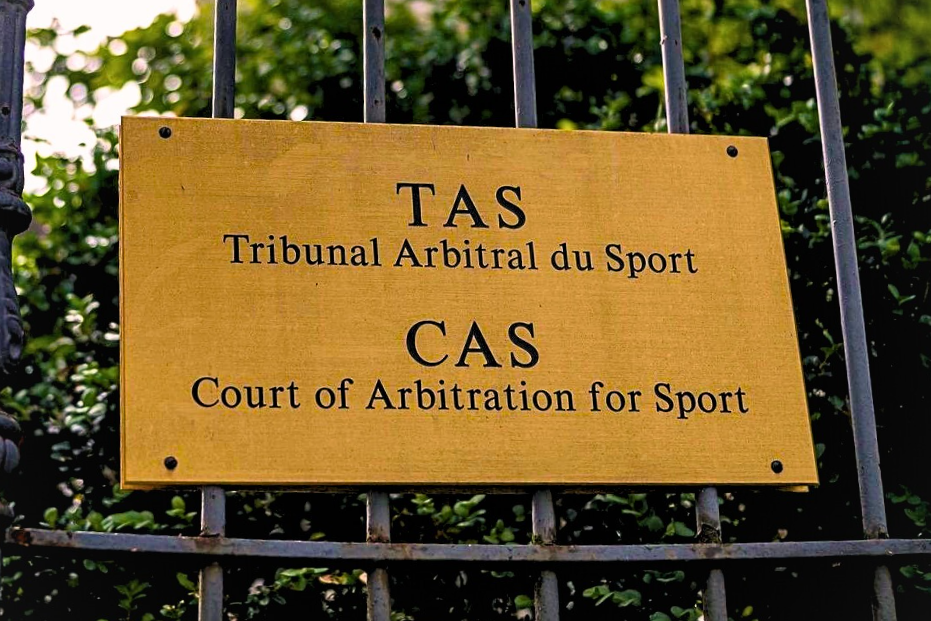
Fairness, Transparency and Integrity are some of the essential principles on which most of the sports function. To keep a check on these principles and uphold them an international tribunal by the name of Court of Arbitration for Sports (CAS) was formed which is a dispute resolution body to maintain harmony and uphold principles of sports. The International Olympic Committee approved CAS in 1983 which came into effect in 1984. The need for CAS was realized after the rapid growth of sports all around the world and global participation of countries in the Olympics making International Olympic Organization a vantage point for constructing of a dispute resolution body for speedy resolution of disputes as well as binding on all parties. So mainly the international tribunal serves a twofold objective:
- To serve as a premier international institution for arbitration for resolution of disputes
- To take position of a Court of binding nature universally in the world of sports
Hierarchy and Division of Power
CAS was fully restructured in 1993 when a new administration and a new financing was established in the form of International Council of Arbitration for Sport (ICAS) and at the same time the CAS adopted a new judgement kind. The CAS has its administrative office in Lausanne, Switzerland, however, the CAS has other centers, which could be described as “decentralized officesˮ, in Sydney and New York City and the latter two have been functional since the mid-nineties. It also operates as an ad hoc tribunal throughout the Olympic Games for instance at the present moment CAS has an ad-hoc office in Paris for the Olympics 2024.
Court of Arbitration for Sports operates through several divisions:[2]
- Ordinary Arbitration Division: Specializes in a wide array of cases, mainly contractual, that develop within the sports sector.
- Appeals Arbitration Division: This division is especially important as the Court hears appeals from decisions provided by sports organizations and bodies such as the CAS in specific doping cases, disciplinary matters as well as eligibility issues.
- Anti-Doping Division: Focused on the doping control cases, which is typical for the steadily increasing significance of fighting with doping in world sports.
- Ad Hoc Division: This division is usually formed for major sporting activities such as the Olympic Games to fast track the determination of matters that may arise during such activities to avoid any interruption which may be caused in the event.
Jurisdiction of Court of Arbitration of Sports (CAS)
Ordinary and appeal proceedings before CAS are governed by the Code of Sports-Related Arbitration (the Code). The Code is regularly updated and the current version came into force on 1 February 2023[3]
CAS has jurisdiction in cases related to sports disputes if the parties to the case have a formal, binding arbitration agreement in writing. This agreement may be in one of the following formats:
- Contractual clauses: A jurisdiction clause that clearly stipulates that CAS will settle disputes exclusively is seen in many sports-related agreements. Unless the parties later agree differently, CAS has “automatic” jurisdiction over disputes arising under such agreements.
- Regulation: A number of international sports federations have statutes and regulations that provide CAS power to settle specific kinds of disputes. This includes appeals against disciplinary or anti-doping decisions of the relevant national association (see, for example, Rule C.12.13 of the Constitution of the Fédération Internationale de Natation), as well as first-instance disputes (see, for example, article 27 of the General Regulations of the International Skating Union). It also includes appeals against decisions of the relevant international federation’s dispute resolution bodies in disputes between its members (see, for example, article 44 of the Statutes of the International Canoe Federation).
- Written agreement: If there are no regulatory requirements requiring the parties to settle their differences in a different designated forum, they may choose to enter into a written arbitration agreement that grants CAS jurisdiction by mutual consent at any point after the contract has been signed (including after the dispute has arisen).
With the signature of the “Paris Agreement,” also known as the “Agreement concerning the constitution of the International Council of Arbitration for Sport,” on June 22, 1994, the establishment of the ICAS and the new CAS organizational structure were authorized in Paris. The presidents of the International Olympic Committee (IOC), the Association of Summer Olympic International Federations (ASOIF), the Association of International Winter Sports Federations (AIWF), and the Association of National Olympic Committees (ANOC) signed this as the highest authority in the sports world.
Features related to Court of Arbitration Of Sports
Time Limit for Challenging Arbitrator- Limitation to challenge the arbitrator is the most common right in most of the arbitration frameworks, which is mostly exercised on the basis of conflict of interest or biasness. This also includes CAS and rules for the same are following:
- Under the Code of Sports-related Arbitration, challenges to the appointment of an arbitrator must be made within 7 days after the party becomes aware of the arbitrator’s appointment or learns of circumstances giving rise to doubts about the arbitrator’s independence.
- If the time limit is exceeded, the right to challenge may be forfeited unless exceptional circumstances justify the delay.
Confidentiality: One of the main reasons parties select arbitration is confidentiality, which keeps private information private and spares athletes or businesses from damage to their reputations. The rules for confidentiality under CAS are:
- CAS proceedings are confidential by default. Awards are published only if both parties consent, unless the matter is of public interest or involves important legal principles.
- Confidentiality extends to all submissions, evidence, and hearings.
Time frame for issuing award: CAS aims to issue an award within 3 months of the case being submitted, though this can vary based on the complexity of the case. In ad hoc divisions, such as those operating during the Olympics, CAS can issue an award in as little as 24 hours to ensure athletes can compete.
The relatively fast timeframe is a major advantage, particularly in the sporting world where decisions need to be made swiftly due to ongoing events or tournaments.[4]
Some of the controversy that has been brought to the court of arbitration for sport CAS in the past few years
Paris Olympics 2024 India’s Vinesh Phogatʼs Case[5]
The recent case of Vinesh Phogatʼs Appeal against Paris Olympics Disqualification and the function of Court of Arbitration for Sports (CAS) in protecting the rights of athletes concerns an Indian wrestler. Phogat, one of the Indian wrestling stars, had to be withdrawn from the Paris 2024 Olympics after reaching a final match and being deemed 100 grams overweight. The legal counsel of Phogat challenged the decision before CAS as being harsh in that it failed to consider circumstances that may have an impact on her body weight at the time of allegedly violating the rules of the championship. The appeal was an attempt to render her eligible to compete and give her a chance of winning a medal for India. The appeal has been allowed to be presented before the CAS and Indian Olympic Association has engaged the services of Sr. Adv. Harish Salve to plead for Indiaʼs Star wrestler. At the moment CAS has assigned lone arbitrator Honorable Dr. Annabelle Bennett who gave her verdict and denied the appeal of Vinesh Phogat on the opinion that the consequences of the failed second weigh-in, which do not arise from any illegal or wrongful act on the part of the Applicant, are draconian. The event of CAS as portrayed in this case is crucial in ensuring that athletes are given an opportunity to be heard especially when it is as crucial as the Olympics. Thus, although the status of Phogatʼs appeal has not been fully determined the action does illustrate the function and purpose of the CAS to see that athletes are treated fairly and that decisions made are fully based and supported by competent authority.
CAS has managed many such complex cases that has put a mark in the organization of world sports. Some of the most notable cases include:
Some of the most notable cases include:
- Oscar Pistorius case: A South African Paralympian who was disqualified to compete in Olympics after an appeal in CAS was granted permission by CAS to compete in the 2008 Olympics.
- Maria Sharapova Doping Case: CAS limited the length of the ban of Russian tennis star Maria Sharapova after she was banned for taking a banned substance while exonerating her, she committed ‘No Significant Fault or Negligenceʼ, this supports CAS in as much as it is a substantive hearing for the doped athletes involved.
- Manchester City vs. UEFA: CAS was also active in 2020 removing the two year ban by UEFA on Manchester City over alleged financial impropriety thus showing its authority in the finance of sports. However, the club was still was fined 10 million Euros for refusing to engage with UEFA investigatory chamber.
- The case of IAAF v. Athletics Federation of India & Other was of two Indian athletes Mandeep Kaur and Ashwini Akkunji who were found to have used anabolic steroids in the year 2010 in the Commonwealth Games. The Athletics Federation of India AFI in the first instance had provided a one-year suspension to the athletes and was much lighter than the standard two-year suspension laid down in the World Anti-Doping Code. The IAAF felt this was inadequate and in October 2013, lodged an appeal with the Court of Arbitration for Sport CAS. CAS decided in favour of IAAF, and the period of suspension was raised to two years, so the alignment of the athletes with the IAAF anti-doping rules came into compliance with International law In this case, CAS helped highlight its mandate of forcing the national sports organizations to adhere to the international standard and enforce doping standard across the world.
Merits And Demerits of CAS
Merits:
- Speed: CAS is designed for rapid resolution of disputes, especially in appeals and emergency situations.
- Expertise: Arbitrators are typically experts in sports law, ensuring informed decisions in highly specialized matters.
- Global Reach: CAS can hear cases from all over the world and issue awards that are widely enforceable, thanks to treaties like the New York Convention.
- Flexibility: Parties have the freedom to choose arbitrators, the applicable law, and procedural rules, allowing them to tailor the arbitration to their specific needs.
- Finality: CAS awards are binding and can only be appealed on very limited procedural grounds, ensuring that decisions are final and conclusive.
Demerits:
- Costs: Arbitration can be expensive, especially for smaller clubs or athletes, as it involves fees for arbitrators, legal representation, and administrative costs.
- Limited Appeals: The grounds for challenging an arbitral award are narrow, which means parties dissatisfied with a decision have little recourse for appeal.
- Confidentiality vs. Transparency: While confidentiality is an advantage in some cases, it can also lead to criticisms about the lack of transparency in decisions that affect public interests.
- Inconsistent Precedents: Arbitration, including CAS, does not follow strict legal precedent, which can lead to inconsistencies in rulings across similar cases.
Conclusion
The Court of Arbitration for Sport (CAS) hold a significant purpose of sustaining the credibility of international sports. It has remained as one of the critical pillars of the international sports law since it is capable of offering fair, efficient and professional solutions to disputes. The framework for arbitration, especially as implemented by CAS, offers several advantages in terms of speed, expertise, and enforceability. However, it also comes with limitations, particularly regarding costs, limited recourse for appeal, and occasional concerns about the balance between confidentiality and transparency. For sporting disputes, CAS remains the premier forum for resolving issues efficiently and with specialized knowledge. The role and function of CAS can be well demonstrated in comparatively recent cases such as Vinesh Phogatʼs appeal against her disqualification in Paris Olympics. It is quite obvious that as the global sports continues to grow and transform, CAS will continue to be relevant is addressing the emerging legal issues within the segment.
[1] Authored By: Lakshit Rajdev, Advocate & Mediator
[2] History of the CAS, Tas-cas.org (2022).
[3] Frequently Asked Questions, Tas-cas.org (2022), https://www.tas-cas.org/en/general-information/frequently-asked-questions.html
[4] Stuart Baird & Matthew Bennett, Sports Law : Court of Arbitration for Sport (CAS), Lexology (2021), https://www.lexology.com/library/detail.aspx?g=59532e84-6609-44ef-baf9-1ef8648650f8
[5] CAS OG 24/17 Vinesh Phogat v. United World Wrestling & IOC